

Highlights:
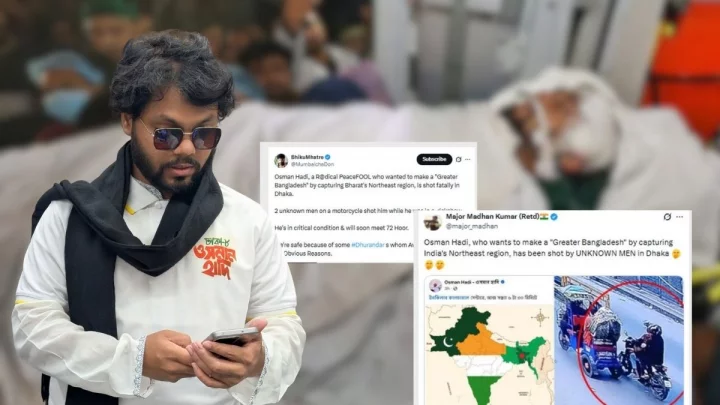
- Osman Hadi, independent candidate for Dhaka-8, was critically shot in broad daylight, sparking widespread concern.
- Investigations reveal coordinated online support from Indian Hindutva accounts praising the attack.
- False claims circulated that Hadi aimed to create a “Greater Bangladesh” by seizing India’s northeast, despite lack of evidence.
- AI-generated images and manipulated posts further fueled political confusion and threats online.
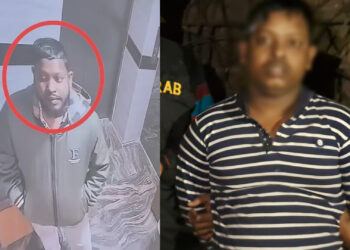
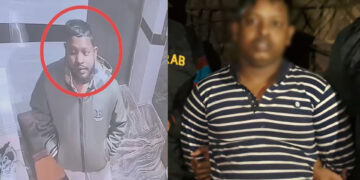
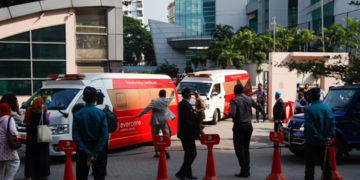
On December 12, just a day after the announcement of the national election schedule, Osman Hadi, the convenor of the Inquilab Mancha and potential independent candidate for Dhaka-8, was critically shot on a busy street in Dhaka. CCTV footage shows two individuals on a motorcycle targeting him. Hadi, shot in the head, is currently receiving treatment at Evercare Hospital.
The assassination attempt triggered significant concern in political circles. While the government and various political parties condemned the attack, reports suggest that social media was flooded with contrasting reactions and disinformation campaigns.
Independent investigative outlet The Dissent reported that several pro-Hindutva Indian accounts and Awami League-affiliated online activists praised the attack, calling the assailants “protectors of India’s interests.”
Former Indian army officer and general secretary of Youth4Nation – TN Chapter, Major Madhan Kumar (Retd.), claimed in an X post that Osman Hadi was shot by unknown assailants in Dhaka because he allegedly sought to seize India’s northeast to form a “Greater Bangladesh.” Analysis of his recent posts indicates he actively campaigns in support of India’s ruling Bharatiya Janata Party (BJP).
Read More: Ashiq Chowdhury to Attempt World Record Wearing Helmet Painted with Hadi’s Image
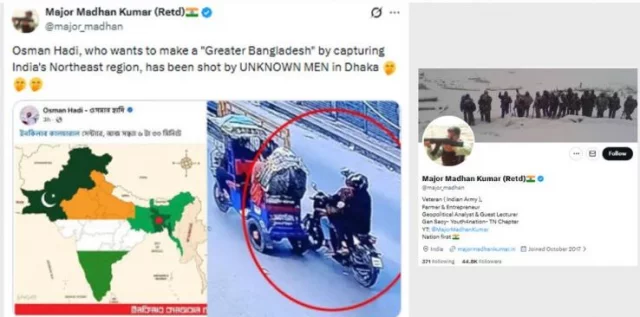
The investigation further revealed that dozens of Indian accounts propagated the unfounded claim that Hadi planned to expand into India’s northeast. A screenshot from one of Hadi’s Facebook posts was distorted to support these claims, though verification showed the map clearly distinguished Bangladesh from India.
Additionally, the hashtag #Dhurandhar was widely used to express support for the attack. Originally related to a Bollywood spy film, the hashtag was manipulated to issue threats and encourage anti-Indian sentiments.
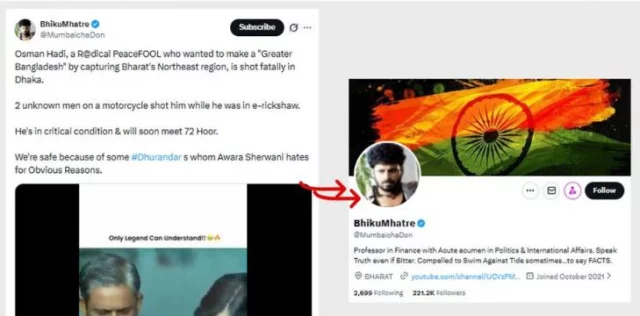
Accounts like BhikuMhatre and activist Dr. Rajesh Patil spread similar claims, falsely linking Hadi to anti-India intentions and threatening him. Another activist, Bhakt Prahlad, explicitly wrote, “This is new India—#Dhurandhar will target you for your anti-India stance.”
Reports also indicate attempts to link Hadi to banned organizations without evidence, including posts calling for border executions. Prior to the attack, Hadi had reported receiving multiple death threats via foreign phone numbers targeting him and his family.
Following the incident, misleading posts attempted to blame BNP and Jamaat-e-Islami, with AI-generated fake images and distorted visuals creating further confusion. The Descent verified that most viral visuals had no connection to the actual event and were artificially manipulated.
Experts conclude that Osman Hadi’s attack triggered a coordinated online propaganda campaign aimed at generating political confusion and obscuring the true nature of the incident.
Source: Kaler kantho