


Highlights:
- Remittance inflow rises 35.7% compared to last year.
- $2.20 billion received in the first 14 days of March.
- Increased inflow largely due to Eid.
Remittance Growth Before Eid
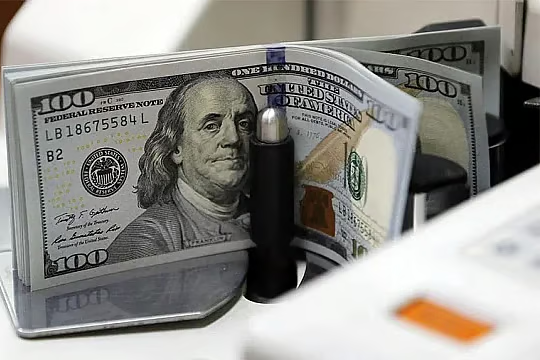
Ahead of the upcoming Eid-ul-Fitr, remittance inflows to Bangladesh have increased by 35.7%. In the first 14 days of March, expatriates sent $2.20 billion (৳22,000 crore) to the country.
In the same period last year, remittance was $1.62 billion (৳16,200 crore). This information was confirmed on Sunday (15 March) by Arif Hossain Khan, Executive Director of Bangladesh Bank.
Eid Effect on Remittance
A senior official of a private bank told The Business Standard:
“মূলত ঈদের কারণে ব্যাংকিং চ্যানেলে রেমিট্যান্স আসার পরিমাণ বেড়েছে। ঈদের পর এ প্রবাহ কমে আসতে পারে। স্বাভাবিকভাবেই তখন রেমিট্যান্স একটু কম আসে।”
Translation: “Mainly due to Eid, the remittance inflow through banking channels has increased. After Eid, this flow may decrease. Naturally, remittance comes a bit lower then.”
The official added that the ongoing Iran-Israel conflict might affect remittance after Eid. If expatriates in the Middle East cannot work due to tensions, the banking channel inflow may drop slightly.
Read More: Cox’s Bazar’s Sugandha Beach freed from occupation after two decades
Exchange Rates and Bank Operations
Another deputy managing director of a private bank said that on Sunday, expatriates were receiving 121.70 to 121.75 Taka per dollar, while LC settlement was done at 121.20 Taka per dollar.
Regional Tensions and Global Impact
- On 28 February, Israel and the U.S. launched a joint attack on Iran.
- Iran retaliated with missile and drone strikes targeting U.S. bases and other countries in the Gulf.
- The Strait of Hormuz is now risky, and ships cannot pass without Iran’s permission.
- Global fuel prices are rising due to these tensions.
Bank Measures and Dollar Demand
- Economists met the new Bangladesh Bank Governor M. Mostaque Rahman last week.
- The central bank is maintaining reserves, sending a signal that dollars will not be easily sold.
- Banks have started buying remittance dollars at higher rates due to this.
A senior official of a private bank added:
“If new investments increase, LC demand will rise. Then the demand for dollars in banks will increase. That’s why banks are buying dollars at higher rates.”
Source: TBS
Share via: